If you work in clinical research, communication often has to fit around everything else. Between managing data, timelines, approvals, and multiple stakeholders, writing can slip down the priority list.
Through my work leading and supporting projects in healthcare communications agencies, I’ve spent years working closely with clinical, regulatory, and medical teams under constant pressure to deliver. What I’ve seen time and again is how writing sits quietly at the centre of it all. It shapes funding conversations, supports ethics submissions, underpins regulatory reviews, and carries research into publications and public updates.
When the writing is clear, progress tends to feel steadier. When it isn’t, small issues can quickly ripple out, creating delays or confusion that no one has time for.
This guide looks at the role of medical writing in clinical research, and how thoughtful, well-structured communication can support studies from early planning through to publication and wider engagement. I’ve written it for research organisations navigating complex science while needing to explain their work clearly to funders, regulators, and broader audiences.
The article is organised around common questions I’ve heard throughout my time working in medical communications. You can read it from start to finish, or dip into the sections that feel most relevant. Either way, the aim is the same: to offer clarity, perspective, and a practical way of thinking about where writing fits into your research workflow, without adding to the load you’re already carrying.
What is medical writing in clinical research — and why does it matter?
Medical writing is the process of turning complex clinical research into clear, accurate documents. These might be used to secure funding, get regulatory approval, inform patients, or publish in journals. For research organisations, it’s a key part of moving a study forward.
If you work in clinical research, you know the pressure: tight timelines, strict compliance standards, and multiple stakeholders to answer to. Professional medical writers help manage that complexity. They create documents that meet regulatory requirements, explain the science clearly, and support your team’s goals from ethics submissions to final publications.
Medical writers help your team:
- Meet global standards like ICH-GCP, CONSORT, and EMA/FDA guidelines
- Communicate clearly with funders, regulators, ethics boards, and participants
- Avoid delays caused by unclear or incomplete documentation
- Maintain consistency across documents, teams, and project stages
- Translate technical detail into messaging that’s relevant and compelling
In my experience, writing also brings structure to the research itself. It pushes teams to clarify their thinking and align on purpose. When that happens early in the process, everything runs more smoothly — from applications and reviews to patient recruitment and outreach.
There’s growing recognition of this role. A 2023 cross-sectional study found that over half (52%) of oncology trial publications in top medical journals acknowledged medical writing support [1]. A 2019 systematic review also found that studies with professional medical writing support were more likely to [2]:
- Follow reporting guidelines
- Be published faster
- Avoid reporting non-approved outcomes
- Use clearer language
In short: writing supports outcomes. It’s easier to win grants, get approvals, and publish successfully when your documents are structured, focused, and easy to read.
That’s where a good medical writer comes in: to guide, clarify, and strengthen the communication behind your research. I’ve written more about this approach in the context of medical case studies, where clarity often determines whether the message lands with its intended audience.
What types of documents do medical writers produce at each stage of research?
Medical writers come in at every stage of a study. Here’s a quick look at the kinds of documents they work on, who they’re for, and how they help keep things moving:
| Stage | Documents | Audience | Purpose |
| Planning | Study protocols Investigator brochures Informed consent forms Ethics applications | Ethics committees Regulators Research teams | Define study design Secure approvals Ensure participant understanding |
| During the study | Interim reports Safety narratives Clinical Study Reports (CSRs) Regulatory submissions (e.g. EMA, FDA) | Sponsors Regulators Trial sites | Report progress Ensure compliance Maintain oversight |
| After the study | Final reports Journal manuscripts Plain-language summaries Press releases or public updates | Researchers Journals PatientsMedia/public | Share findings Support publication Increase visibility and trust |
Each of the documents produced has a specific audience, and the language, tone, and structure need to shift accordingly. A good medical writer knows how to tailor information for regulators, researchers, funders, or patients, without losing accuracy.
I’ve also seen how important it is to maintain consistency across these outputs. When messages shift or the tone varies too much between teams, it can slow down approvals or make your research harder to follow. Clear, aligned writing keeps everything moving in the right direction.
Some concrete examples: How medical writers support key clinical research documents
Informed Consent Forms
Even when teams know what needs to go into a consent form, the wording can make or break how it’s received. Clear, well-structured language helps participants understand the study and speeds up ethics approvals.
These forms show how well‑chosen language can support both ethics compliance and participant trust. Writers help shape this language so it’s respectful, clear, and aligned with regulatory expectations.
Case Report Forms (CRFs)
Medical writers often support the design of case report forms (CRFs). A 2025 study in the Interactive Journal of Medical Research found that unclear or inconsistent wording in CRFs made it harder to combine data across studies [3]. The researchers shared five practical tips to improve CRF design — including using clear questions, standard codes, and consistent answer options [3]. A good medical writer can help apply these ideas so your data is easier to analyse, share, and reuse later.
How do medical writers support communication with external audiences?
Clinical research involves more than just data. It needs to be explained clearly to the people who make decisions, approve funding, oversee ethics, and participate in studies. That includes funders, patients, policymakers, and the media.
Each of these groups has different needs. Medical writers help tailor the message so that it’s accurate, relevant, and easy to understand. This might mean preparing plain-language summaries, simplifying technical content for grant applications, or writing press releases that highlight the real-world impact of a study.
Patient-facing content requires a different tone and structure. I’ve explored this in more detail when writing about patient stories, where clarity, empathy, and accuracy all need to work together.
Writers also help teams stay consistent. When the same core message carries through your grant proposals, ethics materials, and public updates, it builds trust and avoids confusion.
Clear communication makes it easier to answer questions, get buy-in, and show the value of your work. In my experience, bringing in writing support early helps the whole team stay aligned, especially when the audience isn’t scientific.
Can good writing really improve funding, approval, or publication success?
Clear, well-structured documents make it easier for reviewers to understand your study and see its value. That means ethics boards and regulators can respond faster, and funders can make more confident decisions.
Good writing also brings consistency. From early proposals to final papers, medical writers help keep your messaging sharp and aligned. This builds a stronger case for your research at every stage.
Recent research shows that professional medical writing support is linked to faster publication of clinical trial results [4]. In one analysis of Phase III oncology trials, studies with writing support were published in around 10 months after data became available, compared with about 15 months for those without [4]. This difference highlights how writing support can speed up reporting, even during periods of disruption such as the COVID‑19 pandemic.
I’ve also seen researchers sharpen their own thinking through this process. When the story behind the science is clear, it’s easier to move things forward.
How can research organisations use content to build visibility and trust?
Content helps medical research organisations reach the right people and show the value of their work. Used well, it becomes part of your outreach and reputation strategy.
- Blogs and press releases share progress
They help you communicate updates, results, or milestones with clarity. These formats work well for both expert and non-expert audiences. - Plain-language summaries make your work more accessible
These are especially useful for funders, patients, and community partners who want to understand your study without reading full reports. - Consistent updates show transparency
Sharing your work regularly signals that you are open, active, and engaged with your wider community. - SEO helps more people find you
Optimised content makes it easier for people to discover your research online. Over time, this builds your authority in a field.
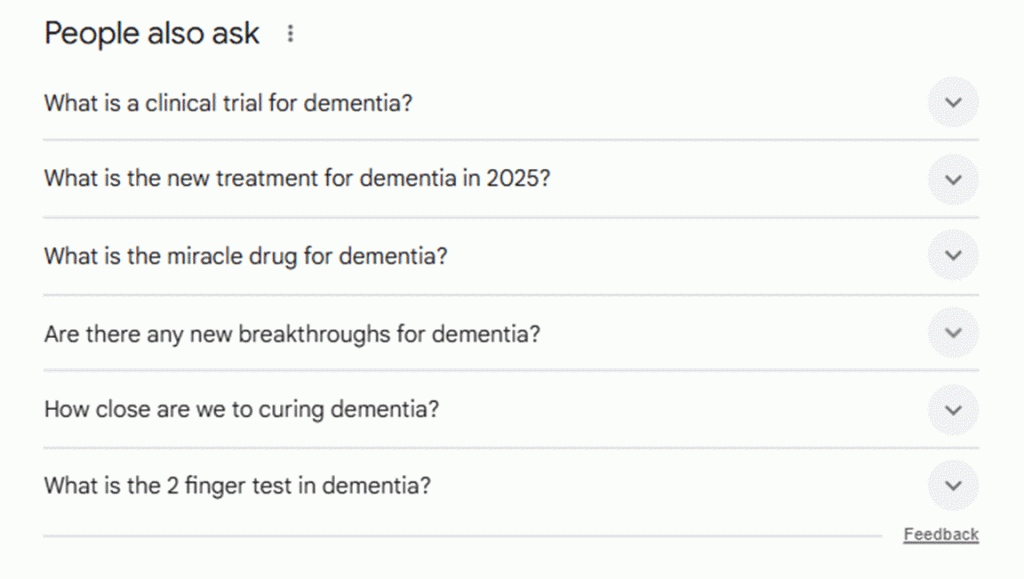
For example, you can see this clearly in the questions that appear in Google’s “People Also Ask” results for conditions like dementia, where searches focus on new treatments, clinical trials, and how close research is to real progress.
Alongside these public-facing formats, longer-form documents such as medical white papers help research organisations explain complex programmes, methodologies, or outcomes in more depth. These are particularly useful when communicating with funders, partners, or senior decision-makers who need a fuller picture.
This mix of accessible updates and deeper content does more than inform. It builds trust and helps people understand both what you do and why it matters.
When should you bring a medical writer into your research workflow?
Bring a writer in as early as possible. This helps set the right direction and keeps your communication consistent from day one.
- Writers can support you during the planning phase: shaping protocols, ethics documents, and informed consent forms.
- They help map out the documents you’ll need throughout the study, keeping everything aligned and on track.
- Early involvement also makes it easier to plan for public-facing outputs, like summaries or press releases.
I’ve found that when writers join at the beginning, their role goes beyond improving the writing. They help teams think more clearly about their goals and how to explain their work to others. It sets a strong foundation for everything that follows.
Final Thoughts: Medical Writing as a Strategic Part of Clinical Research
Medical writing plays a central role in clinical research. Every study relies on documents that explain the science, support approvals, and show why the work matters. When that writing is clear and well-structured, research teams can move forward with confidence.
For medical research organisations, writing supports much more than compliance. It helps teams align around shared goals, present a consistent story across grants and publications, and communicate clearly with funders, regulators, patients, and the wider public. It also shapes how research is discovered and understood, both in journals and online.
My work sits at the intersection of clinical research, patient communication, and healthcare strategy. Over the years, I’ve supported pharma companies, healthcare communications agencies, medical education providers, and advocacy-led projects with white papers, journal articles, patient materials, and thought-leadership content. Much of this work focuses on translating complex evidence into clear, purposeful narratives that stand up to scrutiny and resonate with their intended audience.
Clients often tell me they value my ability to move easily between scientific detail and plain language, and to stay involved from early concept through to final delivery. That combination helps create consistency across documents and stronger outcomes overall.
If you’re looking for support with clinical research writing, strategic white papers, or clear, patient-focused content that reflects the real value of your work, I’d be happy to help. Get in touch to discuss how medical writing could support your organisation’s goals by clicking on the CONTACT button.
FAQs: Medical Writing in Clinical Research
What is the role of medical writing in supporting clinical research organisations?
Medical writing helps research organisations turn complex data into clear, accurate documents. These documents support every stage of a study, from planning and approvals to publication and outreach.
From my experience, good writing also helps teams step back and see the bigger picture. When the message is clear, decisions are easier, and progress feels more controlled.
What types of documents do medical writers create during a clinical trial?
Medical writers work on a wide range of documents, including study protocols, informed consent forms, ethics submissions, safety narratives, clinical study reports, and regulatory submissions. They also support journal manuscripts, plain-language summaries, and public-facing content once results are available.
I often see how the same core message needs to shift slightly depending on the audience. That’s where experienced writing support makes a real difference.
How can professional writing improve funding success, ethics approval, and publication outcomes?
Clear, well-structured documents make it easier for reviewers to understand a study and assess its value. This supports faster ethics reviews, stronger funding applications, and smoother journal submissions.
I’ve found that when the story behind the data is clear, reviewers spend less time trying to interpret the work and more time engaging with it.
Can medical writing help engage external audiences like patients, funders, or the media?
Yes, medical writers help adapt complex research for different audiences without losing accuracy. This includes writing plain-language summaries for patients, clear explanations for funders, and accessible content for public or media use.
In my work, this often means helping research teams explain why their work matters beyond their immediate field.
When should a research organisation (or CRO partner) bring in a medical writer?
Medical writers are most effective when involved early. Bringing a writer in during the planning stage helps shape key messages, align documents, and plan communication needs from the start.
I’ve seen that early involvement creates clarity and consistency that carries through the entire project.
References
- Buck E, Haslam A, Tuia J, Prasad V. Frequency and Characteristics of Trials Using Medical Writer Support in High-Impact Oncology Journals. JAMA Netw Open. 2023;6(2):e2254405. Published 2023 Feb 1. doi:10.1001/jamanetworkopen.2022.54405
- Evuarherhe O, Gattrell W, White R, Winchester CC. Professional medical writing support and the quality, ethics and timeliness of clinical trial reporting: a systematic review. Res Integr Peer Rev. 2019;4:14. Published 2019 Jul 10. doi:10.1186/s41073-019-0073-7
- Rinaldi E, Stellmach C, Thun S. How to design electronic case report form (eCRF) questions to maximize semantic interoperability in clinical research. Interact J Med Res. 2025;14:e51598. doi:10.2196/51598
- Hammad M, Carvell-Miller T, Kerr B, Moss V. Assessment of whether use of a professional medical writer is associated with time to publication of papers reporting phase III oncology clinical trials in two high-impact general medicine journals. Curr Med Res Opin. 2025;41(5):887-893. doi:10.1080/03007995.2025.2505697