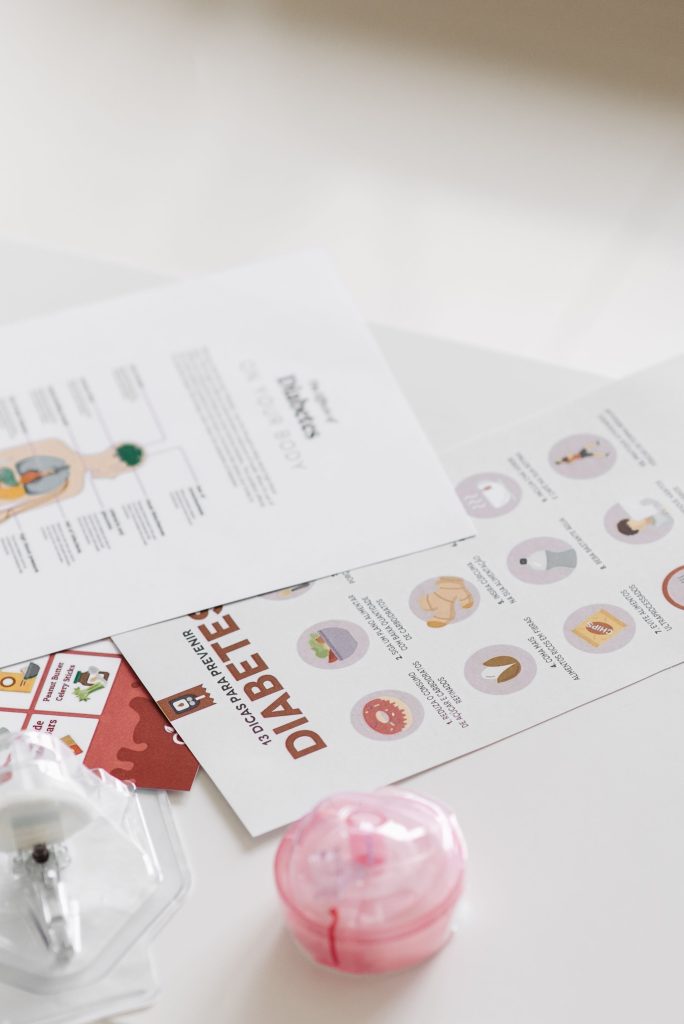
Imagine a pamphlet, consent form or web page filled with accurate, fully approved information that still fails its reader. The science may be right, but the reader finishes unsure what it means for them or what to do next.
You may not have to think very hard. Most of us have been faced, in some form or another, with health information we didn’t understand at some point in our lives. Nearly 9 in 10 U.S. adults struggle to understand and use health information when it is filled with unfamiliar or complex language.
This gap between technical accuracy and usable information is where a great deal of health communication gets lost. If people cannot confidently understand what you publish, you cannot reasonably expect them to act on it or return to you as a trusted source.
What is health literacy?
Health literacy is the ability to find, understand, appraise and use health information to make decisions and take action for your wellbeing.
The World Health Organization frames it around being able to access and use information to promote and maintain good health. A well-known model from Sørensen and colleagues describes four steps:
1. Access
2. Understand
3. Appraise
4. Apply.
It’s a deceptively simple model, and I think we sometimes forget that “Understand” means comprehending to a level at which the person reading it can actively apply it to their own life. That means using plain language principles like leading with the key point. It means being culturally aware of the audience so that they can see themselves in the material and understand how they may apply the information.
Health literacy is not a fixed trait, either. It changes with the topic, the stress of the moment, the format and how well the material is written. A cardiologist may struggle to make sense of information about their child’s rare condition.
The communicator therefore has a responsibility to make the material usable rather than blaming the reader for failing to decode it. It’s our job to take situational stress, occupation in relation to the topic, and other factors into consideration when writing.
The consequences of a lack of health literacy
It is easy to underestimate the scale of the health literacy crisis. In England, around 43% of working-age adults struggle to understand health information written using words alone. That figure rises to roughly 61% when numbers are involved, according to a 2015 study by Rowlands and colleagues. In other words, materials involving both words and numbers may be difficult for more than half of the people they are intended to serve.
The consequences are well documented. Evidence reviews, including work synthesised by the US Agency for Healthcare Research and Quality and a 2015 European Health Literacy Survey, link limited health literacy to poorer knowledge of conditions and services, lower use of preventive care, higher hospitalisation rates and higher mortality among older adults. Other research suggests that health literacy interventions can support diabetes self-management and improved blood glucose control.
Why clear communication is key for health brands
One of the key tenets of health communication is audience awareness. What does someone in this audience do on a typical day? What is their home life like? What, if anything, can we assume about their reading level or prior healthcare knowledge?
Health brands have a responsibility to consider the broad lack of health literacy when creating materials to meet the audience where they are.
The implications if they can’t or don’t are both commercial and ethical. Patient engagement materials that people cannot use are unlikely to change behaviour. Advocacy outputs that confuse their audience will not build the relationships they were designed to support. Each convoluted document also teaches the reader that your organisation is difficult to understand, which steadily erodes trust.
Where health communication loses trust
Most health content breaks down in specific ways:
- Using jargon and unexplained acronyms that assume the reader has a level of knowledge that they don’t.
- Making hidden assumptions about what someone already knows, owns, or can access. This can be as simple as assuming people have transportation to the doctor or access to a computer at home.
- Using poor risk framing. In a study reported by Cancer Research UK, 46% of respondents incorrectly compared risks such as 1 in 100, 1 in 1,000 and 1 in 10. Numbers presented without proper care can mislead as easily as inform.
- Making the next steps unclear, so the reader finishes with loads of information and no idea of what to actually do with it.
How health brands can improve clear communication
Brands earn trust when they make it easier for people to understand the evidence, see how it relates to them and decide what to do next. This is the process I use in my patient-facing work:
- Start with the audience and context. Who is reading this, what might they already know, and what pressures or access barriers could affect how they use it?
- Lead with the essential message. Make the main point and intended action easy to find before adding supporting detail.
- Explain evidence and uncertainty honestly. Use consistent denominators when comparing risk, give numbers context and be clear about what the evidence does and does not show.
- Structure the content for scanning and action. Use descriptive headings, short sections and an obvious next step so the reader does not have to reconstruct the message.
- Test for comprehension and inclusion. Ask intended users what they think the information means and what they would do next; do not rely on readability scores alone.
Good patient communication in healthcare is created deliberately, with the reader’s real situation in mind at every stage.
A clear communication checklist for patient-facing content
Before publishing, ask:
• Can the reader quickly tell that this information is intended for them?
• Is the main message easy to find and understand?
• Are medical terms, acronyms and numbers explained in context?
• Are benefits, risks and uncertainty presented without exaggeration or false reassurance?
• Does the reader know what to do next and where to get help?
If any answer is no, the content may be accurate without yet being useful. Those gaps are where trust can begin to weaken.
Why plain language is not enough
There is a concern that plain language means dumbing information down. Careless simplification can remove details that matter. Done well, however, it is much more precise.
The aim is to make the right nuance usable. A skilled medical writer retains the detail that could change a decision and removes what only adds noise. Uncertainty remains visible because hiding it would mislead. The reading level comes down while the meaning stays intact. That is the difference between flattening information and communicating it responsibly.
A plain-language before-and-after example
Here is the kind of small change that can make a substantial practical difference.
Before: “Administer the medication twice daily at evenly spaced intervals, avoiding concomitant food intake.”
After: “Take one tablet in the morning and one in the evening, about 12 hours apart. Take each tablet on an empty stomach, so either one hour before food or two hours after.”
Both are accurate, but only the second one avoids jargon while telling the reader what to actually do, which is the entire point of writing it down.
Clear writing cannot remove every barrier
Clear writing cannot, on its own, resolve barriers to access, repair distrust or determine whether someone follows a treatment plan. Health literacy also intersects with language, disability, culture, digital access, previous experiences of healthcare and differences in power between institutions and individuals.
Rowlands and colleagues found that people most likely to struggle with health materials were often already facing socioeconomic disadvantage, meaning poor communication can widen existing gaps.
None of this is the reader’s fault. Blaming people for not understanding badly written material reverses the responsibility. Good communication is one important lever among several, and it is one that a health brand can directly control.
That is the work I do: turning complex evidence into patient-facing content, patient engagement materials and advocacy outputs that people can understand and use without flattening the science. I can also help make health literacy a consistent standard across your communications rather than a one-off fix.
Build trust into your patient-facing content
If you’d like your patient-facing content to build trust, let’s talk. You can see examples of my patient-advocacy and patient-facing work, explore how I can help, and get in touch to talk through a project.
Two Make Sense books are coming soon
I am currently working on two practical guides: How to Make Sense of Health Information, for the public, and Make Sense of Medical Writing, for people exploring the profession.
Get on the book waitlist today and be the first to know when release dates are announced.
Frequently Asked Questions
What is health literacy?
Health literacy is how well someone can find, understand, appraise and use health information to make decisions and act. It includes understanding words, numbers and risk, as well as knowing what to do next. It depends heavily on how the information is written and presented.
Why is clear communication important for health brands – and how does it empower consumers in relation to health literacy?
People cannot act on information they do not understand. Limited health literacy is linked to poorer health outcomes and higher use of healthcare, while confusing materials fail their audience both commercially and ethically. Clear communication is one of the most direct ways a brand can support trust and engagement.
What’s the difference between plain language and health literacy?
Plain language is a writing approach that makes text easier to understand. Health literacy is a person’s ability to find, evaluate and use health information. Plain language can support health literacy, especially when it is combined with clear structure, honest risk communication and inclusive design.
Does simplifying health information mean losing accuracy?
No, not when it is done well. Responsible simplification keeps the detail that could affect a decision and removes what only adds noise. Uncertainty remains visible, and the reading level comes down while the meaning stays intact.
How can organisations start improving their materials to make them easier to understand?
Start by identifying the most important message and the next step for the reader. Test materials with the people who will use them, present risk carefully and involve a specialist writer when the content is complex or high stakes.